







Beauty in Small Spaces
by Hope Wallace
“Beauty in Small Spaces.” I really like how these words sound. I was once asked to describe the type of beauty I found in northwest Ohio. My answer was that it has a quiet beauty and one simply has to look. So, the words “Beauty in small spaces” printed across a flier caught my eye as it landed on my desk a few months ago. Curious, I opened it and found an invitation to a conference dealing with issues faced by small art centers located in communities in rural areas. That described the Wassenberg Art Center. Someone had a great idea to pull these centers together for some brainstorming! I signed up immediately and soon learned there are many of “us” out there. One simply has to look.
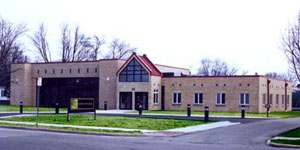
Beauty in Small Places, a 2-day conference for arts organizations of rural and small communities was presented by our neighbors at Arts Place in Portland, Indiana and was the brainchild of Eric Rogers, their Executive Director. Approximately 50-60 individuals with varying roles in the arts attended from as far away as Wisconsin and Colorado. Beauty in Small Places proved to be a great way to connect with other nearby art centers and learn new ways of keeping art in our lives in a challenging economy.
Art in all its forms can be viewed as a non-essential part of life and — sadly — is often one of the first cutbacks for financially struggling schools and organizations. However, too long a period without the ability to express oneself can have lasting and irreversible drawbacks. Small art centers not only in our area but all across the nation are stepping up to fill gaps and keep the freedom to express oneself a hallmark of our basic human nature and our heritage. What does culture leave behind to tell their story? Art.
The topics of not only visual arts but theater and even farmers markets were discussed and presented. Artists and art administrators came from Colorado, Kentucky, Ohio and Indiana to share their experiences and knowledge.
Tim Glotzbach, the Director of Berea College Crafts, Berea Kentucky discussed their highly successful program of work-study in which students (not all art majors) learn a craft to help pay their tuition. These items such as weaving, pottery, woodworking, basketry and blacksmithing have been an integral part of Kentucky’s heritage and the techniques are being preserved in a way which benefits not only the student, but the college, the state and our country as a whole. (bereacollegecrafts.com)
Mike Major is a visual artist and developer from Urbana, Ohio and has been actively involved in drawing and sculpture. He has been restoring sculpture across the country, most notably the Madonna of the Trail monuments placed on the National Road from coast to coast. He also was a key individual in restoring Wescott House, a unique Frank Lloyd Wright example of prairie-style architecture located in Springfield, Ohio. (westcotthouse.org)
The keynote speaker, Maryo Gard Ewe, is a Community Arts Development Consultant traveling from Gunninson, Colorado. She has worked on community arts projects in many states and shared a wealth of knowledge and the creative solutions to which hurdles can be cleared. She also stressed collaboration of different community and area entities is essential
Also presenting their experiences and were Eric Rogers–Portland, IN, Heidi Meade–St. Mary’s, Tod Minnich–Wabash, IN, Angie Cunningham–North Vernon, IN, Kit Miracle–Jasper, IN and Mike Morris–Granville, OH. One presenter, Larry Slocum, Market Manager at Oxford’s, Ohio’s Market Uptown, a local farmers’ market demonstrated many ways art, music, food and fruits and veggies can all share a common ground for the benefit of community.
Populations of the towns represented rarely reached over 15,000 and some had a population of only 800. Good art and art experience does not have to be confined to urban areas. I learned that Van Wert was already has many of the components in place for a successful and expanding arts community. Through collaboration, exploration and an out-of-the-box approach Van Wert’s arts and sense of community can grow into an even more beautiful, small space.
Art gadgets can be simple or complex
By Kay Sluterbeck
Painting in oils, acrylics, or watercolor calls for specialized equipment. Some artists make their own, using household objects such as paper plates for palettes and clean jelly jars or coffee cans for rinsing brushes. Others enjoy visiting art supply stores to buy the latest gadgets for their studios, from multi-level slanted mixing palettes to combination brush holders/water wells.
The most basic piece of equipment for oil, acrylic, and watercolor painters is the palette — the surface on which the artist squeezes out and mixes paint. Hand-held palettes have been around since the 15th century, when oil painters used small square or paddle-shaped objects with a handle. By the 19th century, the palette had evolved into a large oval or kidney-shaped wood surface with a thumbhole near the center. They were generally made of a hard, dark wood like mahogany. The mahogany palette let the artist see how colors would look against reddish brown (at that time most artists tinted their canvas a dark red-brown before starting a painting).
These palettes were soaked in linseed oil and left to dry hard before they were used. This kept the wood from absorbing oil from the paint and making the oil paint mix too “lean” (not enough medium for it to flow). These palettes are still made, usually from mahogany and still in an oblong shape. However, polyurethane varnishes or cellulose lacquer coatings have eliminated the need for soaking.
Nowadays many artists work on a white ground. It makes sense for them to use a white palette so they can judge colors. These palettes are made of melamine-faced laminates or other plastic, ceramic, or enameled materials. They come in all sizes and shapes from big square pieces with thumbholes for oil and acrylic work, to white plastic rectangles with a large mixing surface bordered by wells to hold watercolor paint. Plastic palettes are easy to clean, and even dried acrylic paint will peel off them under warm tap water.
Instead of using a specially-made palette, some artists mix their colors on a glass slab laid over white paper on a small table beside their easel. Others use white dinner plates, saucers, paper plates, old cups, jar lids or cat food cans. A few artists use small seashells, one shell to hold each color of paint. For artists who like really easy clean-up, disposable, non-absorbent paper palettes are available in tear-off pads.
You may have seen an oil painter or acrylic painter using a mahlstick and not known what it was. A mahlstick is a light stick often made of bamboo or aluminum, with a ball-shaped end covered with soft leather or other material. They can be up to four feet long. Some artists make their own mahlstick by using a yardstick or heavy dowel with padding on one end. A right-handed artist will hold the stick with the left hand, allowing the ball end to rest on the canvas or easel so the right hand can rest on it while he or she paints. This helps steady the hand while working in a particular area.
“Dippers” are small, lightweight metal containers that clip onto the oil painter’s palette. They are usually used in pairs, with one for solvent and the other for drying oil or painting medium. Dippers are open, wide and shallow, which makes them easy to clean, but solvent can evaporate quickly in them — so there are versions available with narrower tops and screw-on lids. Dippers must be cleaned carefully after each use.
Palette knives and painting knives are two different things. Palette knives are straight-bladed or crank-bladed steel tools used to move and mix oil or acrylic paint on the palette and to scrape it off at the end of a painting session. Painting knives come in a wide variety of lengths, sizes and shapes, and are used to actually apply paint to canvas. The different sizes and shapes let artists get different effects. A painting knife has a long, thin curved steel shank with a blade at the end. The cranked shaft keeps the blade lower than the wooden handle so the artist’s hand is kept away from the surface of the painting.
Artists’ tools are important, whether an artist uses costly equipment or art tools made from ordinary household objects. But in the end it’s the artist’s skills — not the tools used — that define the results.
.
POSTED: 05/11/11 at 1:22 pm. FILED UNDER: What's Up at Wassenberg?