







Ham radio operation important, fun
DAVE MOSIER/independent editor
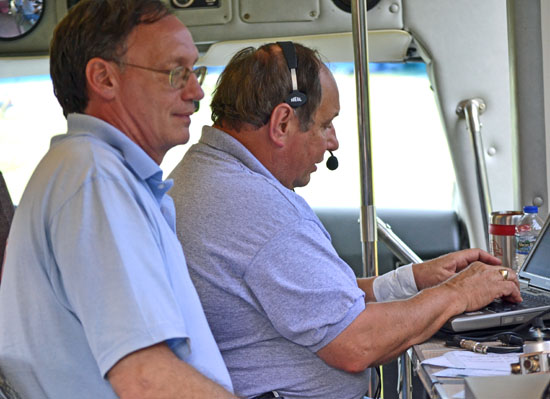
Although it has its serious moments, amateur “ham” radio has provided a number of local residents with a great pastime — with at least one local resident still involved after nearly 60 years.
“It’s a fun hobby that anyone can enjoy,” said Jack Snyder, a ham operator who got his license back in 1977. “We have a serious side, but mostly it’s a fun hobby and a great family activity, too.”
Like other radio clubs, the Van Wert Amateur Radio Club meets on a regular basis, but club members typically go “public” on at least two occasions each year. The first is the annual Field Day that took place back in June, while the second event is the club’s 24th annual Hamfest being held this Sunday, July 17, beginning at 8 a.m., at the Van Wert County Fairgrounds.
Snyder said amateur radio operators’ communications work during disasters is the serious side of the hobby. Ham radio sets are mobile, and, because they’re run by batteries and generators, the radios aren’t affected when power outages occur during disasters.
“When the chips are down, we can take our portable radios out and get information to people who need it,” Snyder said. “The first thing we do is scatter out and find what roads are open … what damage has occurred … so we can provide information for search and rescue teams.”
Snyder added that he was one of the storm spotters chasing the F-4 tornado that hit the county on November 10, 2002, but was left behind with other spotters as the storm outran them. Shortly afterward, he started hearing damage reports on the radio.
While ham radio operators are well represented among local storm spotters, Snyder said they’re more valuable when a storm is over because of their ability to get information through when power is out. Phone lines are also affected during disasters, he added, because people use them more to contact relatives and friends to see if they’re all right.
“The first thing people do is pick up the phone and talk to people,” Snyder said, noting that it doesn’t take long for telephone communications to jam up.
In addition to emergency communications, “hams” in the Van Wert Amateur Radio Club are also involved in the Community Emergency Response Team (CERT) program, which provides participants with first-responder training that allows them to do a number of early response activities, including the ability to set up a landing zone for a life-flight helicopter.
Meanwhile, Corky Poling, a founder of the Amateur Radio Club and the member with the longest active service, says he got into ham radio operation because it was a lot of fun. Poling, who received his ham radio license at the age of 14 in the early 1950s, said it was his first love.
“Before I discovered girls and cars, I had a ham radio license,” he said with a chuckle. To hear him tell it, his love of ham radio nearly ended his marriage before it got a good start.
“My wife and I went to Niagara Falls on our honeymoon and I spent a good part of the time talking to a Canadian ham radio operator,” Poling said. “She’s got a long memory, so she probably remembers that to this day.”
Both Poling and Snyder admit that, while ham operators do important work during disasters, they both get lots of enjoyment out of contacting other “hams” across the country — and even the world. Contacting other “hams” becomes a real priority, though, during the club’s annual Field Day. During that event, which runs 24 hours from Saturday afternoon into Sunday afternoon, clubs across the country set up their equipment and compete to see how many verified radio contacts they can log. In June, the number of contacts exceeded 1,000 for just one local station, Snyder said, adding that the local club is typically in the top 10 in its region.
He added that, while the club has set up for Field Day the last few years near the local Emergency Management Office on Lincoln Highway, the name was more indicative of the site in the earlier days when club members were literally out in fields setting up their gear.
“We were out there in the sticks,” Snyder said. “That’s where the name comes in: you take all your stuff into a field.”
The local club not only has voice stations, but Morse Code stations as well, during Field Day and Snyder said he feels it’s a good thing for “hams” to know.
“I doubt that we’ll ever get rid of it, since there so much things you can with it that you can’t do with voice,” he said, noting that, because of its narrow bandwidth, Morse Code is almost unstoppable. ”It’s the first digital code, when you think about it.”
During the past few years, the club’s popularity as a way to get messages through during the Van Wert County Fair and other local events has waned, Snyder said, largely because of cheap long distance rates, email and texting.
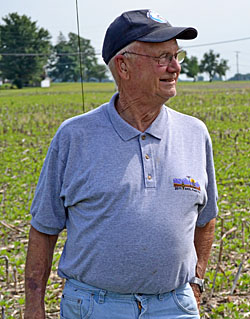
“We use to send hundreds of messages during the fair, but relatively few now,” he added.
Unlike the “old days,” Snyder said today’s “ham” operators don’t have to have a geographically based call sign. “Now we have local hams who have Hawaii or other rare call signs,” he explained.
He also said rare contacts, such as those in Hawaii and Alaska and the small state of Rhode Island, are the ones local “hams” try to obtain during Field Day.
The other major event — Sunday’s Hamfest — is a gathering of amateur or “ham” radio operators and features an indoor and outdoor flea market of radio, computer, and other electronic and electrical items. Indoor tables and outdoor space is available for those who have items for sale.
The Van Wert Hamfest is also a fundraising activity for the local ham radio club and supports the club’s public service activities, including purchasing and maintaining radio equipment that is used in routine and emergency communications, including severe weather reporting. The public is invited. Admission is $5. Refreshments will be also available for purchase.
POSTED: 07/16/11 at 5:08 am. FILED UNDER: News