







Local doctor shares mission experiences
DAVE MOSIER/independent editor
While infant mortality is an area where the United States can improve, child-bearing here is nothing like it is in Third World countries, such as those in South and Central America and, particularly, in Africa.
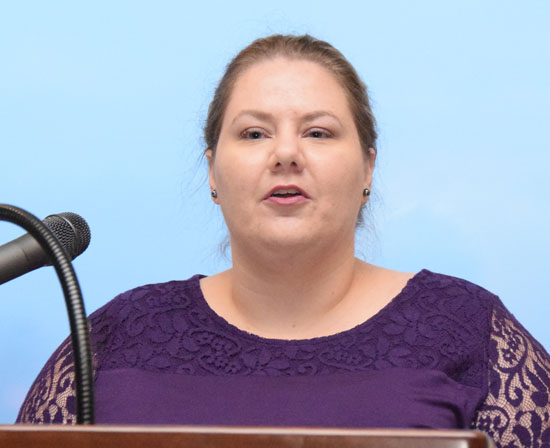
Local OB/GYN specialist Dr. Carrie Huber should know, since she’s spent a number of years working in medical missions in South America and the African country of Kenya.
Dr. Huber was guest speaker at the YMCA’s annual Good Friday Breakfast at Willow Bend Country Club and talked about the challenges women face in poorer countries to bear and raise children. Child-bearing usually starts early in Third World countries, where women — girls, actually — start having children between the ages of 15 and 17. Because of the high infant mortality rate in those countries, women also have more children, which also increases the danger the women themselves may die of complications from childbirth, including the very real risk of infection.
Dr. Huber talked mainly about the two years she spent at a mission hospital in Kenya, one of only three in the country, and noted the main reasons women in that country didn’t seek obstetrical care was, first, the cost, and second, the lack of transportation to clinics and doctors. She noted that women must often walk for hours to access neo-natal care in a country like Kenya, where few people own cars or other motorized vehicles and public transportation is rudimentary.
Kenyan women also receive incorrect advice from older women who act as midwives and in similar roles in villages and rural areas, while government hospitals can have long waiting lines for women who overcome tribal cultural stigmas against organized medical care.
In addition, Kenya is plagued by power “brownouts”, poor water quality and widespread lack of communication — all challenges for those providing medical care to pregnant women, as well as other patients.
Consequently, an average of 730 children die out of every 100,000 born in the country — an extremely high mortality rate when 16 deaths per 100,000 is the cut-off for effective obstetrical care.
Dr. Huber said that, as a mission doctor, she was often asked to be counselor, nurse and “warrior” battling superstition and other cultural stigmas, as well as being a doctor while in Kenya, noting: “I am their last hope — if I can’t fix it, no one can.”
She also acknowledged that mission doctors often relied on a higher power when treating women in Third World countries.
“We treat them, but Jesus heals,” Dr. Huber said, adding, “We might be their last chance, but Jesus is their last hope.”
After living two years in Kenya, the local physician said she felt like someone without a country because she had problems fitting into both cultures. “You start to believe that you don’t belong anywhere, you don’t have a culture anymore,” Dr. Huber said. “You start to feel very lonely.”
In addition to great hunger, great pain and great sorrow, she noted that she had also experience great joy in Kenya, as God provided her with just enough to overcome the challenges she faced there.
“God gave me manna, just enough to get the job done,” Dr. Huber said.
She also created an online journal to share some of what she was doing in Kenya with family, friends and other interested people, but said doing so was the “eternal legacy of sharing.”
“It was never my story, it was theirs,” Dr. Huber said of detailing her time in Africa. “Kenya was a great humbling experience.”
The local physician said that, despite the challenges, she hopes to return to Africa some day to help out and see how some of the physicians she trained there are doing. In addition to treating women in Kenya, she also trained 46 young native doctors.
“I think I’ve left a piece of may heart there,” Dr. Huber said.
POSTED: 04/04/15 at 8:00 am. FILED UNDER: News