







Hospital celebrates 1,000 robotic surgeries
VW independent staff/submitted information
OhioHealth Van Wert Hospital has reached a major milestone, performing more than 1,000 robotic-assisted surgeries since launching the program in 2020.
“We’ve had the robot for five years now,” said Thomas Conte, MD, Van Wert Hospital chief of surgery. “As a rural facility, we’re on the cutting edge. It gives patients access to relatively new technology without having to travel to a larger center.”
Since the program began, Van Wert Hospital surgeons have expanded how robotic-assisted surgery is used, performing everything from appendectomies to colon resections using minimally invasive techniques. They operate the da Vinci Surgical System, which replicates their hand movements with robotic precision.
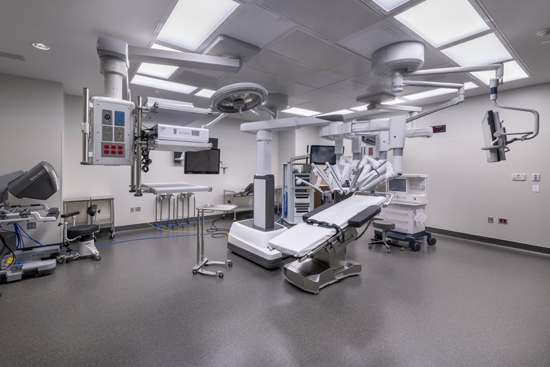
“We each have hundreds of cases under our belt,” Dr. Conte said. “That experience matters. It builds confidence for patients and helps everything run smoothly in the operating room. This is very much a team effort. Nurses and everyone in the OR play a role in that success.”
Van Wert Hospital surgeon Jeremy Stoller, MD, said reaching 1,000 cases is a proud moment for the team.
“Hitting this milestone is reflective of the fact that we have transitioned completely to using robotic surgery for any minimally invasive hernia and abdominal surgery,” he said. “In the past, some surgeries required large incisions. Now we can do more procedures through small incisions, which means faster recovery and less post-surgical pain.”
Patient Richard Hines turned to robotic surgery to receive advanced care without the added stress of traveling far from home. When diverticulitis sent him to the emergency room multiple times, surgery became necessary.
“I wasn’t sure what to expect,” Hines said. “But after talking with Dr. Conte, I felt completely comfortable. He explained how the robot works and how it would help during the surgery. That made a big difference going in.”
Recovery turned out to be much easier than he anticipated. Pain was minimal, and within a couple of days, he didn’t need any medication. Being able to recover close to home added to the comfort. His wife could visit easily, and there was no need to travel back and forth.
Robotic-assisted surgery is increasingly used as an alternative to traditional open surgery and standard laparoscopic procedures. The system provides surgeons with a clearer, three-dimensional view and precise control, helping them work in areas that may be difficult to reach with other instruments.
“Our techniques and training are the same as any other big hospital with regard to the robotic platform,” Dr. Stoller said. “I think for our hospital and community, that is a big deal.”
For more information, visit ohiohealth.com/services/surgery/our-programs/robotic-surgery.
POSTED: 02/12/26 at 9:36 pm. FILED UNDER: News