







A look back at the branches of The Brumback Library

Editor’s note: this year the Brumback Library is celebrating 125 years of service to the community. Each month, library officials will tell the story of The Brumback Library, chapter by chapter. This month’s installment looks back at the history of the library’s branches around Van Wert County. The story is told by Brumback Library Patron Service Specialist Susan K. Semer.
By Susan K. Semer
The successful opening of The Brumback Library in 1901 was the culmination of years of planning, building, purchasing and staffing. The location was conducive to allow city residents acquisition of books on a daily basis. However, the original goal of John S. Brumback was to give access to the entire county.
The board realized books must be sent to the people of the rural districts, but there wasn’t a forerunning formula to follow. It was important to keep support for this venture of a county library and to establish trust and service to every person in the 423 square miles of Van Wert County. The board proposed an experimental plan utilizing the railroads, the rural general stores, drug stores and hardwares, and finally the proprietors of each of these establishments.
Willshire was chosen as the first recipient of branch services. Willshire had been the original county seat and was the furthest location from the main library. The Hurless/Brown Hardware received a shipment of 100 books via the Clover Leaf Railroad, from the Van Wert Brumback Library. The books were packed in a stenciled gray Brumback packing crate with hinged lid and lock. A bookcase was provided for display and so inaugural library service at this branch began with twenty-five young people checking out books the first day.
The same year Ohio City received a shipment of 50 books to be housed in the Swoveland Drug store and it was noted “Good books are the best companions…. and we would like to share in the benefit of this library as well as the expense.”
Convoy, Middle Point, the Van Wert County portion of Delphos, Hutchinson, Venedocia, Dasie (present day Middlebury), and Cavett also were recipients of books to establish mini-libraries in their places of business.
A new matter of discussion for the board to contemplate concerned the branch custodians of these books. Trained librarians in Van Wert were paid to circulate books, but how would rural business owners be compensated? It was decided these library stations brought in potential customers so the partnership was a mutual benefit for both the branch and The Brumback Library, but a yearly salary of $50 was paid to each branch for extra duties. Blue and white enamel signs were posted at each location:
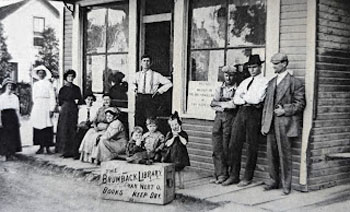
- Branch of the Brumback Library
- Free to all residents of the county.
Stories circulated about the benefits of reading the books provided and more than one young person, through reading a book, found themselves introduced to a new career. Wetsel (Wetzel), Glenmore, and Converse were added, making 12 branches and it was determined 100 books were read quickly at each of these locations. Therefore, 1,000 new books were purchased and divided between the twelve branches and every two months the books were rotated. Books were delivered by railroad, wagon, and occasionally a car if the business owner had access to a vehicle and a reason to visit the city of Van Wert. It was noted after the second year of branch service “with a circulating library the farming community now has the world as its neighbor.”
At the end of the third year, branch meetings were established to check records and circulation. Common problems included non-returned books, scanty records of check-outs, and damaged or lost books. Instructions were included on disposal if a contagious disease was an issue with a checked out book.
The small villages of Scott, Dixon, Wren, and Elgin rounded out the original 16 branches. It was decided the sixteen crates would be returned to the main library four times a year and reassigned to a new location. This allowed for the addition of new titles, removal of damaged books and inventory.
A reading club was established at the Elgin branch and now people were requesting specific titles. The small newspapers published lists of titles available at each branch, and the crates contained reading-list pamphlets to be distributed by proprietors.
By the fourth year “it was no longer an experiment, it was an institution” and magazines and periodicals were included in the crates. A German book published in Dresden included an entire page devoted to The Brumback Library and the opportunities and services it provided to its rural people.
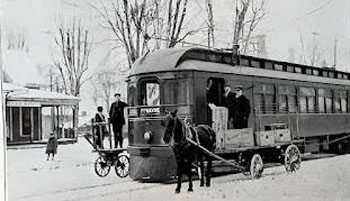
The Brumback board and librarians used every opportunity to advertise their books and services. The Van Wert County Fair, which brought in thousands every year, was the scene of a large booth displaying books, pamphlets, and exhibits. They hung signs above the livestock pens, and other farm displays asking trivia questions, hinting the answers could be found in a specific titled book at a library. Railroad stations, hotels and public places had pamphlets listing the branches, their hours, and books available. The 1913 pictures of each branch were displayed at the fair, around town, and at farm institutes. Those same pictures were included in a school exhibit at The Ohio State Fair. A reference service was started, answering questions sent through mail from all ages and locations. The local car garages had lists of books available featuring car maintenance, mechanics and engines.
A partnership with county schools and many teachers resulted in Brumback library books being placed in classes for students to use. Several Sunday school classrooms in churches became stations with check-out libraries because of weekly attendance.
It is noteworthy to credit the library board and librarians for equal priority to adults as well as children in their endeavors to provide reading materials to our rural communities. They used what data they had collected to purchase and place books in these branches. Higher education isn’t always formal education and every time a book was opened by a farmer researching corn yields, a housewife learning to sew, or a child curious about pirate ships connections were made establishing new interests, satisfying curiosity, and solving problems. Books placed in these branches and stations entertained, provided knowledge and ideas and developed life-long learners.
125 years later as we celebrate The Brumback Library for its longevity and invaluable service to our county we can’t forget to mention the void filled by the branches of yesterday. Today the five branches of Convoy, Middle Point, Ohio City, Willshire and Wren, though relocated to their own individual buildings, continue to be an indispensable part of this proud county landmark. These small locations provide books in print, audio and download form, computer and printer access, storytimes, activities, contests and crafts. The titles and housing have changed, but the goal and intent of John S. Brumback remains “ to provide books and service to everyone.”
POSTED: 03/01/26 at 9:41 pm. FILED UNDER: Top Story