







The Brumback Library’s global impact during WWI, WWII
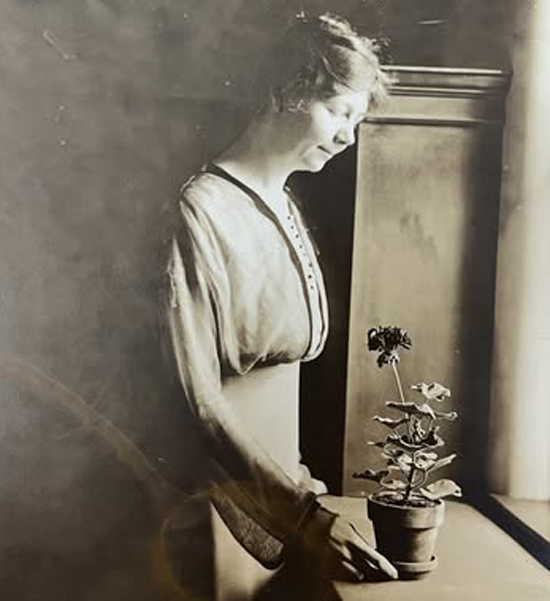
Editor’s note: this year the Brumback Library is celebrating 125 years of service to the community. Each month, library officials will tell the story of The Brumback Library, chapter by chapter. This month’s installment looks back at the history of the library’s branches around Van Wert County. The story is told by Brumback Library Patron Service Specialists Marie Markward and Theresa Mengerink through content collected from the writings of Joy McCleery, Harriet Long and library files.
By Marie Markward and Theresa Mengerink
The Brumback Library of Van Wert County holds a singular distinction as the first county library in the United States, but its historical significance extends far beyond its architecture.
During the two most defining global conflicts of the 20th century, this institution transcended its role as a book repository to become a vital engine for the home front and a lifeline for those serving on distant battlefields. From teaching local households how to bake “Patriotic Bread” to establishing permanent military libraries in occupied Europe, the Brumback Library showed that information and community morale were essential on all fronts.
When the United States entered the Great War in 1917, the library immediately mobilized to support the war effort. Under the leadership of Librarian Harriet C. Long, the institution became the county’s primary center for war mobilization. In October of that year, the War Board of Ohio issued an urgent call for housewives to “stand guard” over the nation’s food supply. Because Allied soldiers were fighting rather than farming, America had to fill the deficit.
The Brumback Library stepped up by launching a campaign to help educate community members. The library hosted a week-long exhibit of “Patriotic Breads.” Van Wert County women were encouraged to bake loaves using substitutes for wheat, such as cornmeal, bran, rice, rye, and oatmeal, and bring them to the library to share and compare. The library even published these recipes in the daily newspaper to ensure every kitchen in the county could contribute to the effort of putting Van Wert homes on the “fighting line.”
Beyond food conservation, the library managed the local campaign to raise funds for the American Library Association’s national war effort. A committee of prominent local citizens, including ward supervisors and directors like Miss Long, worked to raise Van Wert’s $420 share of a national fund to purchase reading material for soldiers. By August 1917, the library had also become a collection point for magazines and books, shipping boxes of literature to Camp Sherman in Chillicothe to provide soldiers with a much-needed escape from the rigors of training.
The most extraordinary chapter of the Brumback’s World War I contribution was written by Harriet C. Long herself. In May 1918, she resigned her position at the Brumback Library to serve directly with the American Library Association overseas. Her journey took her to the heart of post-war France, where she worked with the American Expeditionary Forces (A.E.F.). At the A.E.F. University at Beaune — which became the largest university in the English-speaking world for a brief time in 1919 — Long organized a 25,000-volume library from scratch.
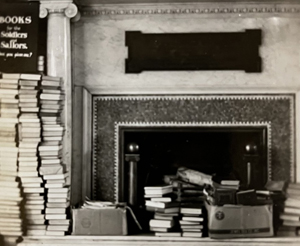
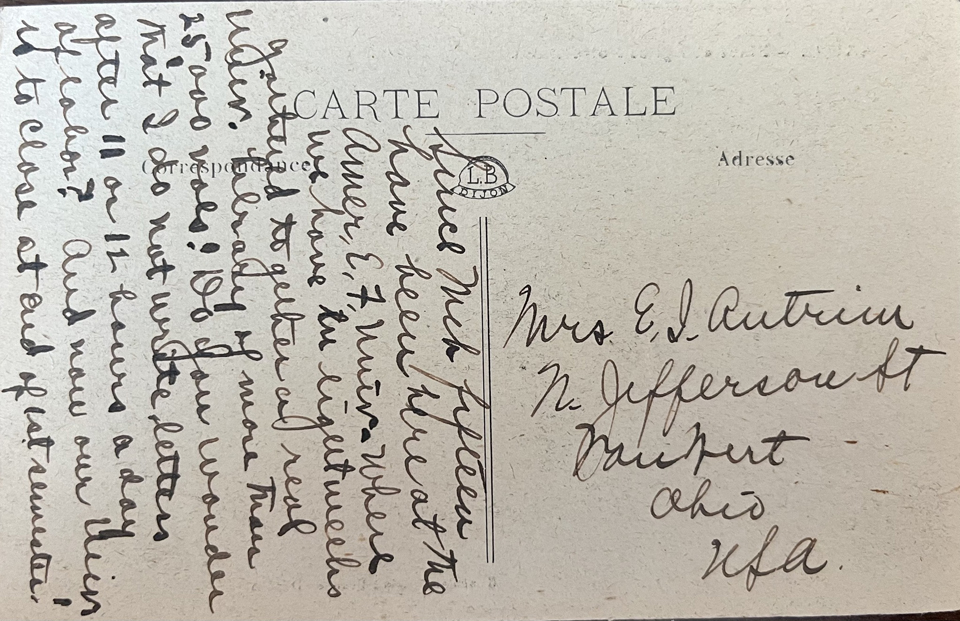
She worked from 8 a.m. to 9:30 p.m. for seven weeks straight to ensure that the 10,000 soldier-students had the resources they needed to prepare for civilian life. Her service eventually took her to Coblenz, Germany, where she organized the first permanent army library in a former German Officers’ Club. Through her letters back to Saida (Brumback) Antrim, Long expressed a deep pride in her work, noting that while she was exhausted, she would “do the same thing over” to serve the troops.
Two decades later, the Brumback Library once again mobilized for war. In January, 1942, shortly after the attack on Pearl Harbor, the library initiated its local branch of the Victory Book Campaign, sponsored by the ALA, the Red Cross, and the USO. Under the direction of librarian Mary Hardy, the library became the central headquarters for collecting and shipping books to soldiers, sailors, coast guardsmen, and merchant seamen. This was a true community endeavor. The Red Cross, YMCA, and YWCA served as drop-off points, while local Boy Scouts went door-to-door throughout Van Wert and visited collection spots regularly to transport the books back to the library for processing.
The 1943 campaign had a specific, practical focus. While adventure stories and detective novels by authors like Doyle and Tarkington were popular for morale, there was a desperate need for technical books published after 1935. The library sought texts on chemistry, mathematics, mechanical drawing, photography, and shop mechanics. The goal was to help men advance in rank during their service and provide them with knowledge that would benefit them upon their return to civilian life.
The generosity of Van Wert County was immense. By April 30, 1943, local residents had donated 964 books during that year’s drive alone. These books were actively deployed to places like the USO club in Kingston, North Carolina, and the Regional Center in Cincinnati for distribution to army camps. Nationally, the campaign collected over five million books that year, with Ohio ranking seventh in the nation for its contributions.
The Brumback Library’s legacy during these two wars demonstrates the power of a local institution to affect global change. Whether it was the technical manuals sent to the Pacific or the “Patriotic Bread” recipes shared in the library’s halls, the Brumback Library remained true to a simple, powerful sentiment: every book sent was a message to a soldier that someone in Van Wert was his friend. Harriet C. Long always requested that each book be signed by the donor to connect our service men and women with their hometown.
POSTED: 04/05/26 at 8:42 pm. FILED UNDER: Top Story