







It’s National Fire Prevention Week
VW independent staff/submitted information
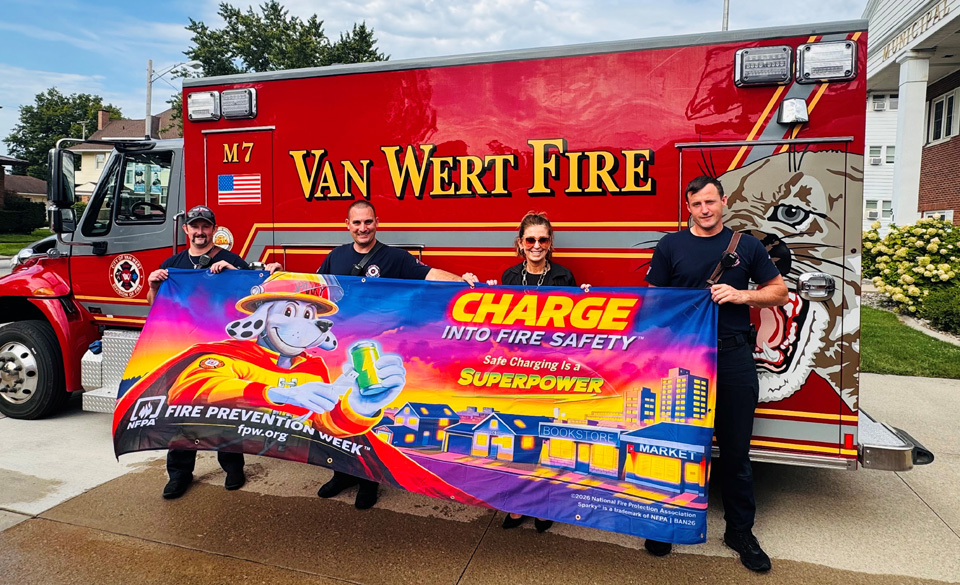
Many of the devices in our daily lives – phones, tablets, laptops, tools, toys, e-bikes, and scooters, to name a few – run on rechargeable lithium-ion batteries, which store high amounts of energy in a small space. If the batteries are damaged or charged incorrectly, they can overheat, start a fire, or even explode. With these concerns in mind, Van Wert and Convoy Fire Departments are teaming up with State Farm and the National Fire Protection Association to promote Fire Prevention Week, which is this week, and this year’s theme, “Charge into Fire Safety: Safe Charging is a Superpower.”
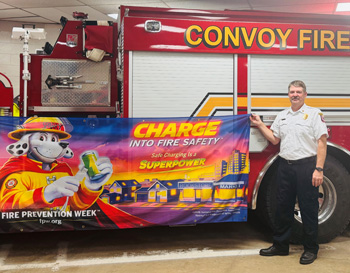
This year’s campaign works to better educate the public about how to safely use, store, and recharge lithium-ion powered devices, helping minimize risks at home and other locations. NFPA does not yet track data on the number of U.S. home fires involving lithium-ion batteries, but an increasing number of lithium-ion battery fires and explosions reported by fire departments, news outlets, and other sources underscores the potential hazards they present.
“Properly charging devices can significantly reduce the risk of fires and associated hazards,” said Lorraine Carli, vice president of Outreach and Advocacy at NFPA. “Making informed choices and employing simple habits are critical to these efforts.”
In coordination with NFPA, Van Wert and Convoy Fire Departments and local State Farm agent Tisha Fast are encouraging all residents to actively support Fire Prevention Week by following these tips and guidelines:
- Use the cord and charger that came with your device or one approved by the manufacturer. Using the wrong charger can damage the battery and increase the risk of fire.
- Charge devices on a table, desk, or other hard, flat surface. Do not charge them on beds, couches, or under pillows. Devices and chargers produce heat during normal charging. Soft surfaces can trap heat and block airflow, which can cause the battery to overheat.
- Stop using your device if it feels very hot, starts to swell, is smoking, or has a strange smell. These are warning signs that the battery may be damaged or failing.
- Unplug your device when it is fully charged. Do not leave it plugged in longer than needed. Leaving a device plugged in too long can increase heat and stress on the battery.
- Charge larger items like e-bikes, scooters, and power tools outside and away from exits. These batteries are larger and store more energy. If they fail, fires can grow quickly and spread.
- When on a plane, keep your device where you can see it while charging. Do not charge devices in overhead compartments. Do not charge e-cigarettes or vapes on a plane. If a battery overheats or fails, it is important for the flight crew to respond quickly.
To learn more about Fire Prevention Week and this year’s theme, “Charge into Fire Safety: Safe Charging is a Superpower,” visit fpw.org. Additional Fire Prevention Week resources for children, caregivers, and educators can be found at sparky.org and sparkyschoolhouse.org.
Fire Prevention Week is celebrated throughout North America every October and is the oldest U.S. public health observance on record. For more than 100 years, Fire Prevention Week has worked to educate people about the risk of home fires and ways to minimize them. Local fire departments, schools, and community organizations play a key role in bringing Fire Prevention Week to life in their communities each year, spreading basic but critical fire safety messages.
POSTED: 10/04/26 at 8:40 pm. FILED UNDER: News