







The Brumback Library continues to evolve
This year the Brumback Library is celebrating 125 years of service to the community. Each month, the library will tell the story of the Brumback Library chapter by chapter. This month’s installment looks back at the circulation department. The story is told by Circulation Supervisor Lauren Leatherman.
By Lauren Leatherman
For the last 125 years, the Brumback Library has connected Van Wert County residents with information, entertainment, and community. While the methods have changed dramatically since the library first opened its doors in 1901, its mission remains remarkably similar to the vision established by its founders. As one early library publication stated: “The object of the public library is twofold. To place within reach of all the best literature of the centuries. To bring from every department of thought all the best and most useful books of the day.” That mission has guided the library from a collection of a few thousand books to a system that now provides access to millions of items.
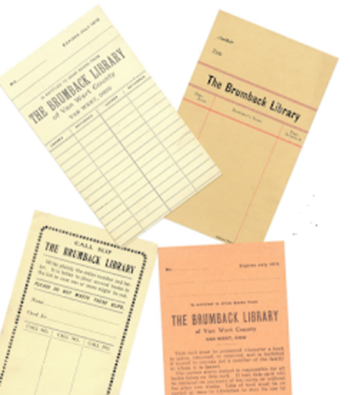
Before the Brumback Library could open its doors in 1901, staff spent six months cataloging approximately 1,800 books donated by the Ladies Library Association and an additional 3,000 volumes purchased through the tax levy funds. On opening day, patrons checked out about 40 books during the library’s first three hours of service. By the end of the first month, circulation had grown to more than 280 books.
The library began with approximately 4,500 volumes on its shelves and added another 2,250 books during its first year. Daily circulation averaged 107 items, demonstrating the community’s enthusiasm for the new institution.
As the collection expanded, so did public access. By January 1936, the Brumback Library’s collection had grown from 5,000 volumes to 43,000 while continuing to extend service throughout the county through branch locations and school libraries. One of the earliest branches opened on December 31, 1901, in C. L. Gordon’s general store in Hutchinson, a small trading center eight miles northwest of Van Wert. Reached only by wagon road, the branch represented the library’s commitment to serving rural residents. The branch system continued to evolve over time with later expansions including locations in Middle Point, Ohio City, and Wren.
Schools also played an important role in extending access. By 1901, 49 school libraries were operating throughout the county. By 1911, that number had increased to 89 school libraries, with more than 1,300 volumes added in a single year to meet the demand. Every township in Van Wert County had at least one school library, with some having as many as seven, helping bring books directly to students. The effectiveness of the library’s outreach efforts was recognized beyond county borders. Historical records note that the library received a letter of commendation from the superintendent of public schools in Alger, Ohio, praising the success of its school library system.
While today’s library visitors enjoy flexible borrowing policies, early patrons followed a much stricter set of rules. Originally, families were limited to two library cards because of the relatively small collection. Patrons had to be at least nine years old to obtain a card, and non-county residents paid an annual fee of $3 to borrow materials.
Books circulated for two weeks with one renewal. After a renewal, an item had to remain on the shelf for at least 24 hours before the same borrower could check it out again. New books could only be borrowed for one week and could not be renewed.
Patrons were fined two cents per day for overdue books. If a borrower became ill with a contagious disease, they and their family members were prohibited from checking out materials. If a library book had been exposed to a patron with illness, patrons were instructed to contact the librarian for guidance, and the library would waive fines if the item needed to be destroyed to prevent the spread of disease. Even library etiquette was carefully regulated. Conversations with other patrons were discouraged unless they related directly to library use.
Throughout its history, the Brumback Library has adapted to changing community needs. Periodicals became an increasingly important part of library service during the early twentieth century. By 1908, periodicals were circulating through branches, and systems were developed to share magazines and journals throughout the county. A 1936 newspaper article noted that “much serious reading is done at Brumback Library by users of large lists of periodicals.” The library later expanded into new forms of media. In 1975, local newspapers announced that the Brumback Library had begun loaning films, reflecting the growing popularity of audiovisual materials. Under later library leadership, computer search stations were introduced, bringing digital access to patrons long before the internet became commonplace in homes.
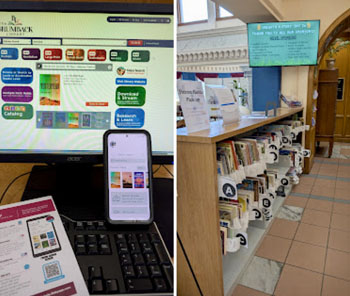
While books remain at the heart of library service, today’s Brumback Library offers far more than its founders could have imagined. Through participation in the Serving Every Ohioan (SEO) Library Consortium, Brumback patrons have access to a shared collection of more than 8 million items from over 110 Ohio libraries. The library now serves more than 5,600 registered users, a number that continues to grow. The library system now averages approximately 6,000 physical circulations each month across its locations. The self-checkout station at the main library alone processes about 1,200 checkouts monthly.
Digital borrowing continues to grow through Libby, the library’s eBook and audiobook platform. Patrons currently borrow approximately 2,500 digital items each month, demonstrating the popularity of online access while also showing that digital materials have supplemented—not replaced—traditional books.
The Brumback Library is constantly looking for innovation whether from the past or future. Following the example of periodical rotations at branches in the early 1900s, the library also rotates specialized collections among its locations each quarter. Wonderbooks, audiobooks, graphic novels, and manga travel between branches, ensuring patrons throughout the county can enjoy popular materials without requiring every location to maintain large duplicate collections.
Meanwhile, library staff continue the ongoing work of building and maintaining the collection. Approximately 300 new items are added each month, while older, damaged, outdated, or underused materials are carefully evaluated and removed to keep the collection relevant, useful, and responsive to community needs. Collection development decisions are guided by professional standards that consider community interests, patron requests, circulation trends, reviews from trusted industry sources, and the library’s mission to provide diverse viewpoints and educational resources. This ongoing process ensures that the collection remains relevant, useful, and responsive to the interests of Van Wert County residents while making room for new materials and emerging formats. Additionally, staff has been working hard to update the collection’s identification system to better reflect the stages of reading and be more visually accessible by all patrons.
While the methods have changed from wagon-road branches, school libraries, and printed book lists in local newspapers, to digital downloads, consortium lending, and self-checkout stations, the purpose remains remarkably consistent. For the last 125 years, the Brumback Library has worked to place knowledge, information, and opportunity within reach of every resident of Van Wert County, following the same mission envisioned by its founders: connecting people with the best ideas, stories, and information available.
POSTED: 07/07/26 at 8:21 pm. FILED UNDER: News