







Auditor’s report supports city tax need
DAVE MOSIER/independent editor
The 2015 financial health indicators report on Van Wert recently released by Ohio Auditor of State David Yost underscores concerns city officials have about Van Wert’s General Fund finances.
The state-generated report identifies a municipality’s fiscal practices and budgetary conditions that, if uncorrected, could result in the community being placed on fiscal watch or emergency. Out of the 15 indicators applicable to Van Wert, the city had two “critical outlook” indicators and three “cautionary outlook” indicators. Critical outlooks signal a potentially high risk of fiscal stress, while cautionary outlooks are fiscal situations of which a municipality should be aware.
Van Wert’s critical outlooks came in indicators that looked whether revenues exceed expenditures and the percentage of general revenues to expenditures.
In the first indicator, whether revenues exceed expenditures, a municipality is given a “critical outlook” if it has an operating deficit of more than 5 percent. In 2014 and 2015, the city had an operating deficit of 6 percent, largely because the .22-percent Safety Capital Income Tax was used for capital expenditures, rather than for police and fire salaries and benefits, which was the case in other years since 2009.
City Auditor Martha Balyeat said the indicator provides information on operating deficits, and the size of those deficits.
“If expenditures exceed revenues, an operating deficit exists,” she noted, adding that the size of Van Wert’s deficit put in the “critical outlook” category.
The indicator underlines the city’s quandary in having to use a portion of the .22-percent tax to fund police and fire salaries and benefits. If the money is used for those purposes, instead of capital purchases, both departments could find themselves short of funds needed to purchase equipment. That, in turn, could result in decreased fire and police protection for the community.
Balyeat added that a majority — nearly 70 percent of the city’s General Fund — goes for police and fire operating expenses: salaries, benefits, relatively minor equipment purchases, and other operating costs, while the .22 capital tax has been used to purchase cruisers, fire trucks and ambulances, and other more expensive equipment.
“We are fortunate to have a tax that supports their capital purchases…,” the city auditor said.
While both departments currently have good equipment, Balyeat said, that could change if a portion of the .22-percent tax continues to be needed to pay operating expenses.
“Do you want your police and fire to protect you with mediocre or less-than-desirable equipment?” the auditor asked.
In the second “critical outlook” indicator for Van Wert, the percent of government revenues to the percentage of net expenses for governmental type activities (GTA) — with a ratio of less than 100 percent seen a critical outlook — the city’s ratio of revenues to expenses was 95 percent in 2013 and approximately 99 percent in 2015.
Obviously, Balyeat has noted, having expenditures exceed revenues is never a good thing, especially since state law requires that political subdivisions balance their budgets each year. Any year with a negative balance would force a municipality to use reserve funds to balance the budget, assuming it had any, to avoid being placed on fiscal emergency. Being placed on fiscal emergency would put the city under the fiscal control of the state, which could decide to lay off city workers — including police officers and firefighters — close parks, and possibly take away other services city residents now enjoy.
“As we go on, the indicators that we’re spending more than we’re taking in, that gap just widens,” Balyeat said, noting that the city has limited financial reserves it could use to make up any operating deficit.
“We can spend more in 2017 than we take in because we have a little bit of a reserve balance … but as you go farther and farther, and dip more and more into those reserves, by ’18 and ’19, we won’t have any reserves to dip into,” the city auditor explained.
One of the city’s three cautionary indicators is also an area of concern, according to Balyeat and Mayor
Jerry Mazur.
The most important of the “cautionary indicators” the city received, Balyeat noted, was one that measures average daily expenditures to revenues.
“This indicator identifies the number of days the city’s cash and investments will sustain the entity, based on the daily average expenses/expenditures,” the city auditor said, adding that number is without additional revenues coming in.
Having fewer than 30 days’ worth of assets is considered a cautionary outlook, and, in 2014 and 2015, when the .22-percent tax was not used for police and fire expenses, Van Wert had less than 30 days’ of cash and investments on hand.
The mayor said that figure is particularly troubling.
“It we don’t have enough money to run beyond 30 days, we’re in trouble,” he said, noting that the city should ideally have enough cash and investments on hand to operate for six months or more.
Meanwhile, although Van Wert can operate in the black for this year, the city could see an operating deficit in 2018, with that gap widening in years to come.
That’s a situation that would make staff and-or service cuts necessary to avoid a fiscal emergency declaration.
Most of the blame for the city’s current fiscal situation can be placed on the state, which has eliminated the tangible personal property and inheritance taxes, and also cut local government funds municipalities rely on.
Mayor Mazur estimated that lost revenues from the above sources has cost the city approximately $800,000 a year — enough to keep city finances in the black.
While cutting funding for municipalities, libraries, and other entities has given the state a $1 billion “rainy day” fund, it has led to a number of cities and villages having to seek other revenues to remain fiscally solvent.
The other factor for the city is its aging population. Although retired seniors don’t contribute much, if anything, to the city’s income tax revenues, they are the largest user group for EMS services, although Medicare and home insurance medical coverage does pay for a portion of those costs.
Balyeat said cost cutting is not an option for the city, whose departmental budgets are already “cut to the bone.”
For Van Wert, those factors have led to the necessity of placing a .28-percent income tax increase on the May primary ballot. With the current 1.72 city income tax, that would mean city residents would pay a total of 2 percent in city income tax. While that’s higher than some neighboring municipalities, Balyeat and Mazur noted that a number of those communities are electric power generators, which brings in substantial additional revenues to those cities.
If passed by voters, a .28-percent tax increase would generate approximately $1 million dollars annually.
“Just about enough to offset for what’s been lost,” the mayor said. “That would maintain us in a really good position to maintain the amenities in this town, and keep the services we have…”
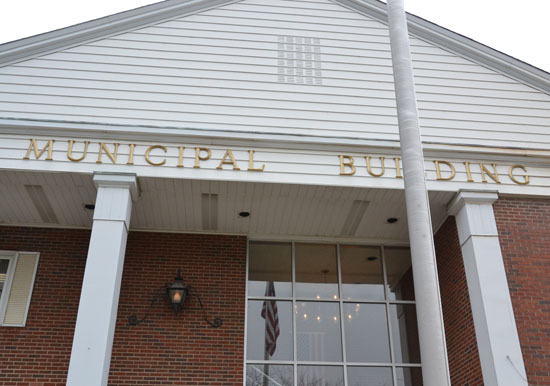
“We don’t want to build a Taj Mahal, we just want to maintain what we have,” Balyeat added, noting that Van Wert’s Municipal Building has needed a new roof and HVAC system for some time, but there’s no money to pay for it.
Both Balyeat and Mazur also said the .22-percent safety tax needs to be returned to its original use if the city is to maintain adequate police protection, as well as keep its low fire protection rating.
If approved, the tax increase would cost those making $50,000 an additional $140 a year in income taxes.
POSTED: 02/06/17 at 9:15 am. FILED UNDER: News